Version from Yogyakarta, Indonesia
geplak — Yogyakarta, Indonesia
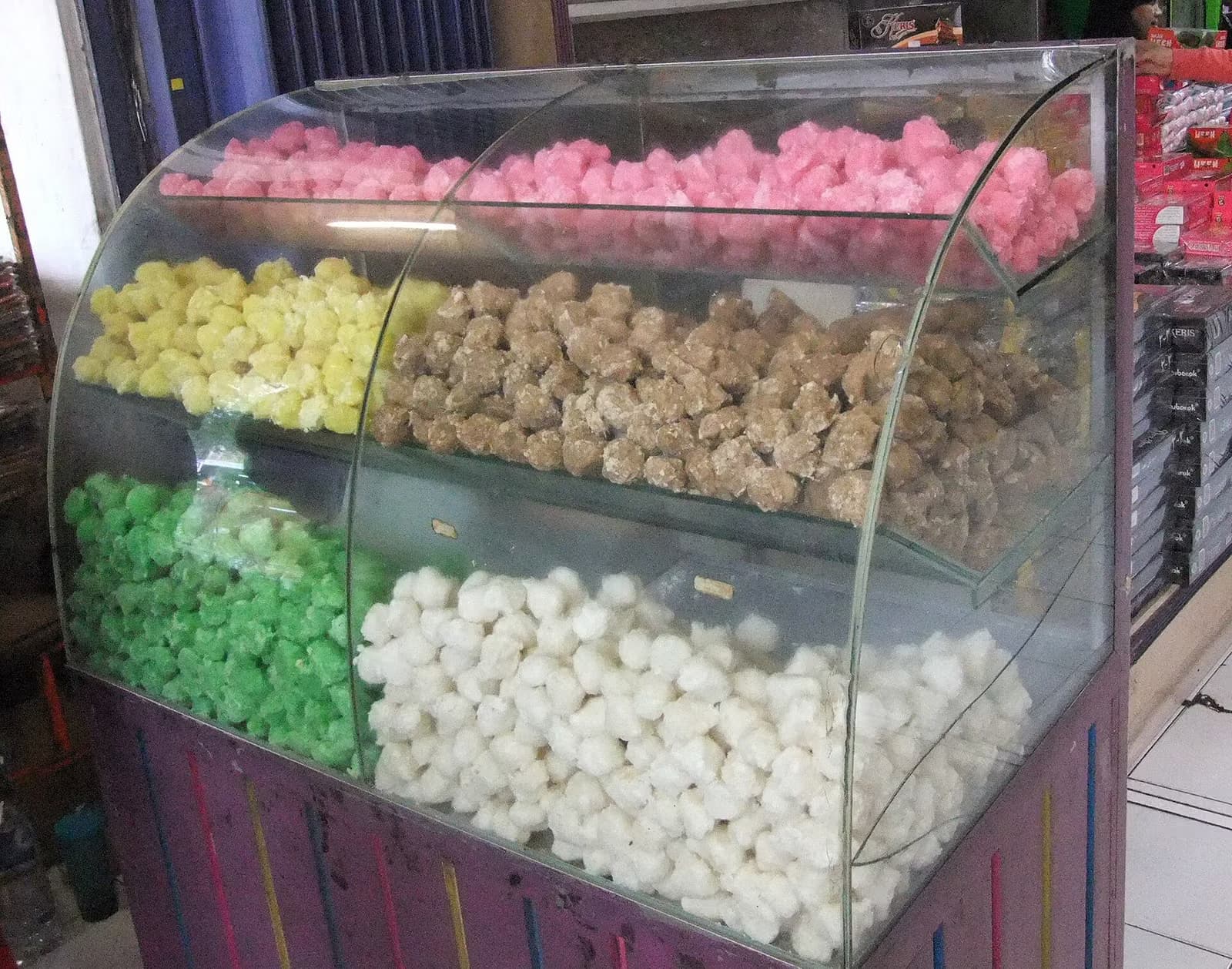
Geplak from Yogyakarta is a brightly colored sweet of grated coconut and sugar, a candy specialty of the town of Bantul.
- 30 min
- Prep
- 15 min
- Cook
- 20
- Servings
- Easy
- Difficulty
Geplak is a sweet snack made from roughly equal parts coarsely grated coconut and sugar, cooked together into a soft, chewy candy and usually colored in bright pastel shades. Some versions add rice flour for structure, or citrus leaf and pumpkin for flavor and color.
This sweet is associated with the Yogyakarta area of Java and is reported as being mainly produced in Bantul, a town within Yogyakarta known for the candy; it is commonly sold there as a local specialty and souvenir.
Sugar is dissolved in a little water and simmered into a light syrup, often with pandan leaf for scent. Grated coconut and a pinch of salt are stirred in and cooked over low heat, with rice flour added gradually so the mixture thickens and holds together. Once thick, the warm mixture is divided into portions, each tinted with a different food coloring, then shaped by hand into small ovals or balls and left to firm up as they cool.
What distinguishes geplak from other Indonesian coconut sweets is its dry, slightly grainy chew, closer to a soft candy than a jelly or a cake, and its habit of being sold in an assortment of colors in the same box rather than as a single uniform sweet. The proportion of coconut to sugar, and whether rice flour or pumpkin is added, differ from one producer to another.
Preparation
Combine the sugar and water in a pan, and heat until the sugar dissolves into a syrup.
Add the pandan leaves and simmer for 5 minutes.
Stir in the grated coconut and salt, and cook over low heat, stirring constantly.
Sprinkle in the rice flour gradually, stirring until the mixture thickens and holds together.
Divide the mixture into portions, and tint each with a different food coloring.
Shape the warm mixture into small ovals or balls by hand.
Let cool completely on a tray until firm.