Version from West Sumatra, Indonesia
Karupuak jangek — West Sumatra, Indonesia
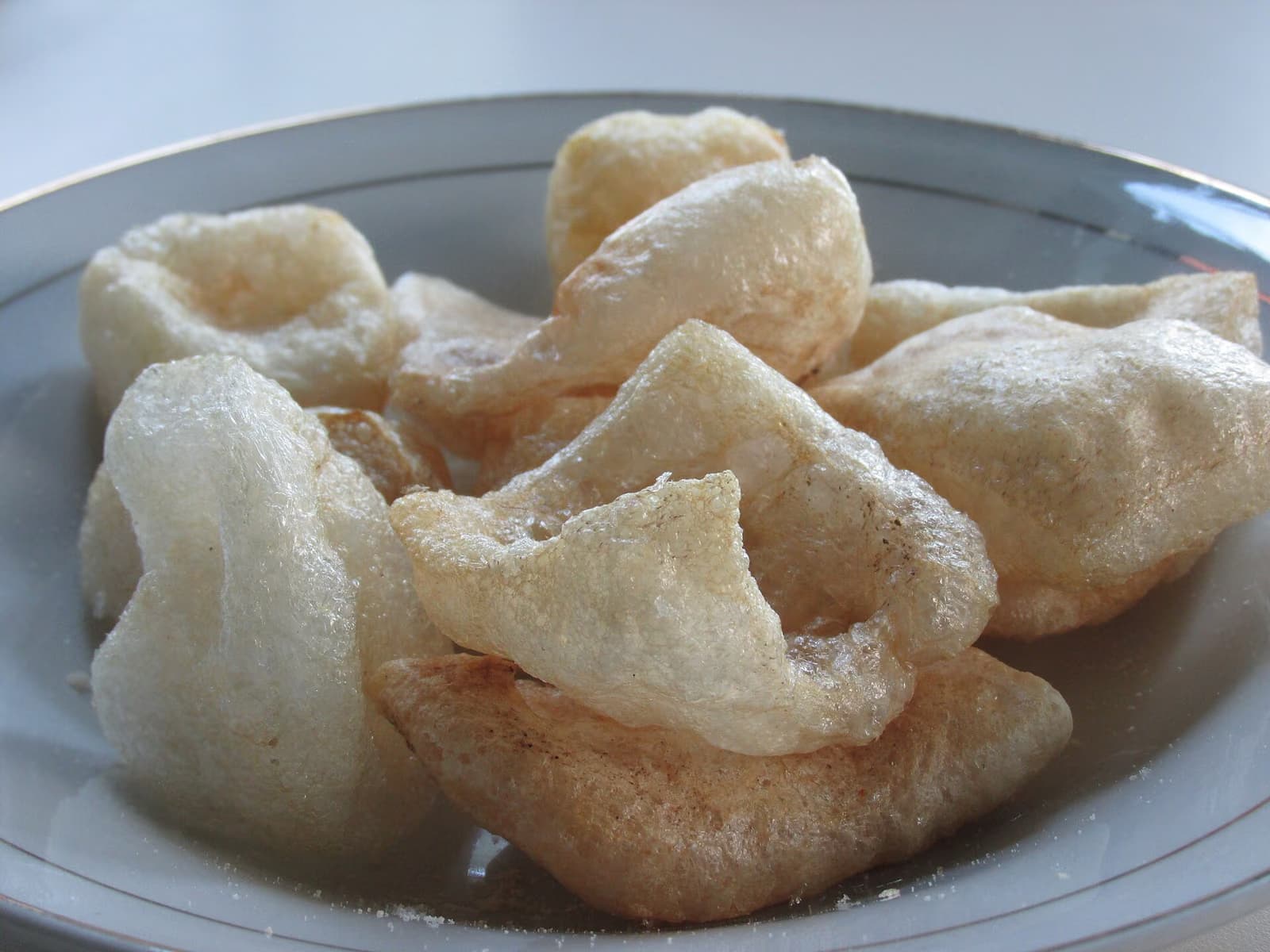
A crisp cracker from West Sumatra made by drying and frying seasoned cow or buffalo hide until it puffs and turns light and brittle.
- 60 min
- Prep
- 90 min
- Cook
- 8
- Servings
- Hard
- Difficulty
Karupuak jangek is a cracker made from cow or buffalo hide, dried and then fried in two stages until the tough skin puffs up into a light, brittle, savory snack, part of the wider Indonesian kerupuk family of fried crackers.
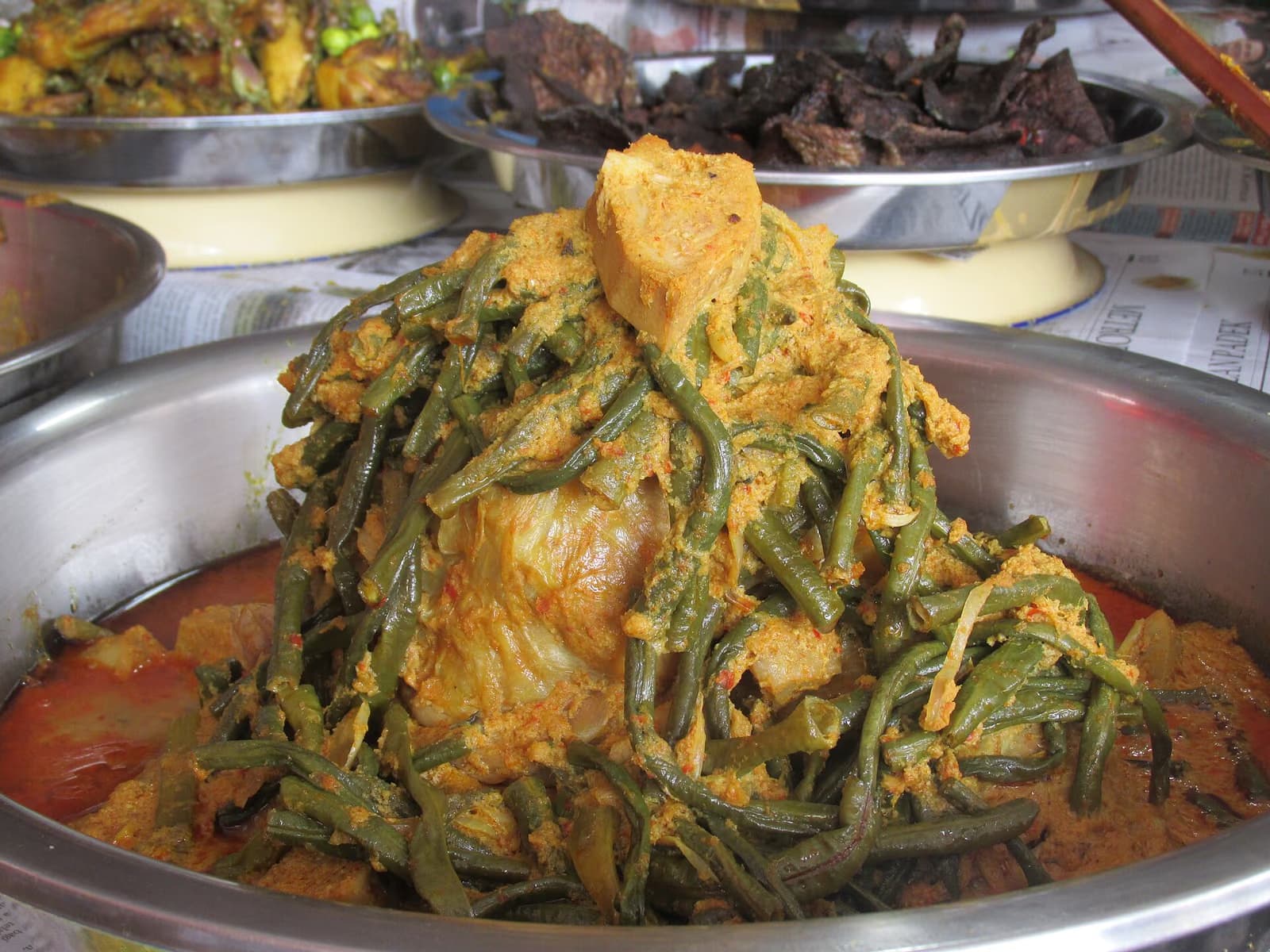
It is reported from West Sumatra, where it is associated with Minangkabau cooking and used both as a snack on its own and as an ingredient stirred into dishes such as gulai, a spiced coconut-based stew, rather than only eaten plain.
To prepare it, the hide is cleaned, boiled with garlic, coriander and salt until softened, then sliced and dried until fully hard. It is fried a first time at a lower temperature to drive out remaining moisture, cooled, and then fried again at high heat, at which point it puffs up dramatically and turns crisp.
What distinguishes this cracker from most other kerupuk in the same family is its base ingredient: rather than starch, shrimp or fish, it is made entirely from hide, giving it a denser, chewier bite before frying and a distinctly savory, slightly gelatinous character once fried and crisp.
Preparation
Singe and scrape the hide to remove any remaining hair, then wash thoroughly.
Boil the hide in water with garlic, coriander seeds and salt until softened.
Drain and slice the softened hide into strips or squares.
Dry the pieces in the sun or a low oven until fully hard and brittle.
Fry the dried pieces briefly in warm oil to remove moisture and shrink them further, then set aside.
Fry the pieces a second time in hot oil until they puff up and turn light and crisp.
Drain on paper and let cool before serving or storing in an airtight container.