Version from West Sumatra, Indonesia
Karupuak jariang — West Sumatra, Indonesia
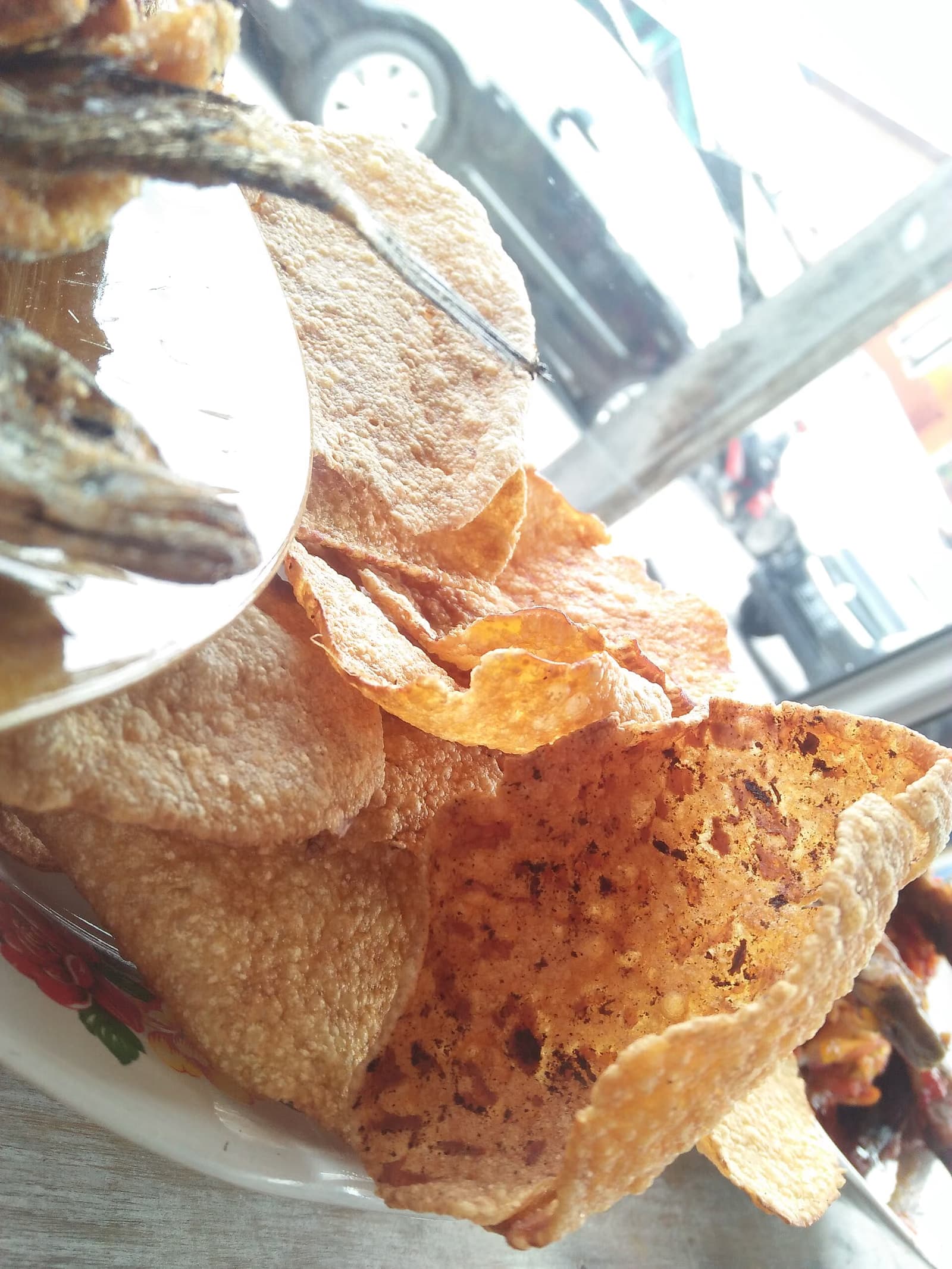
Karupuak jariang are crisp fried chips made from thinly sliced jengkol beans, a pungent snack from the Minangkabau markets of West Sumatra.
- 30 min
- Prep
- 60 min
- Cook
- 6
- Servings
- Easy
- Difficulty
Karupuak jariang is a fried snack made from jengkol, the large flat seed of the dogfruit tree also known as the jengkol bean, sliced thin and fried until crisp like a cracker. In the Minangkabau dialect of West Sumatra, "karupuak" means cracker and "jariang" is the local name for jengkol.
The snack is reported from West Sumatra, where jengkol grows widely and is eaten boiled, fried whole, or turned into this dried chip form sold in markets and roadside stalls alongside other fried snacks of the Padang region.
To prepare it, mature jengkol beans are boiled until soft, peeled, and sliced into thin rounds or flattened with a mallet, then seasoned with a paste of garlic, coriander and salt, sometimes with turmeric, before being dried briefly and deep-fried in hot oil until golden and crisp.
Within the broader family of Indonesian bean and legume crackers, this version is set apart by its base ingredient: jengkol carries a strong, persistent aroma that fades somewhat with boiling and frying but remains part of the snack's character, distinguishing it from milder crackers made from cassava, melinjo or fish. Vendors vary the thickness of the slices and the spice paste used before frying.
Preparation
Boil the jengkol beans for about 45 minutes until tender, then drain and cool.
Peel off the outer skin and flatten each bean with a mallet or slice into thin rounds.
Grind garlic, coriander, turmeric and salt into a smooth paste.
Rub the paste over the flattened jengkol and leave to season for 15 minutes.
Heat oil and deep-fry the slices in batches until golden and crisp, then drain on paper.