Buuz — Russia
Russia
0
This version belongs to the family Buuz, which holds 2 versions placed elsewhere. None is presented as the original.
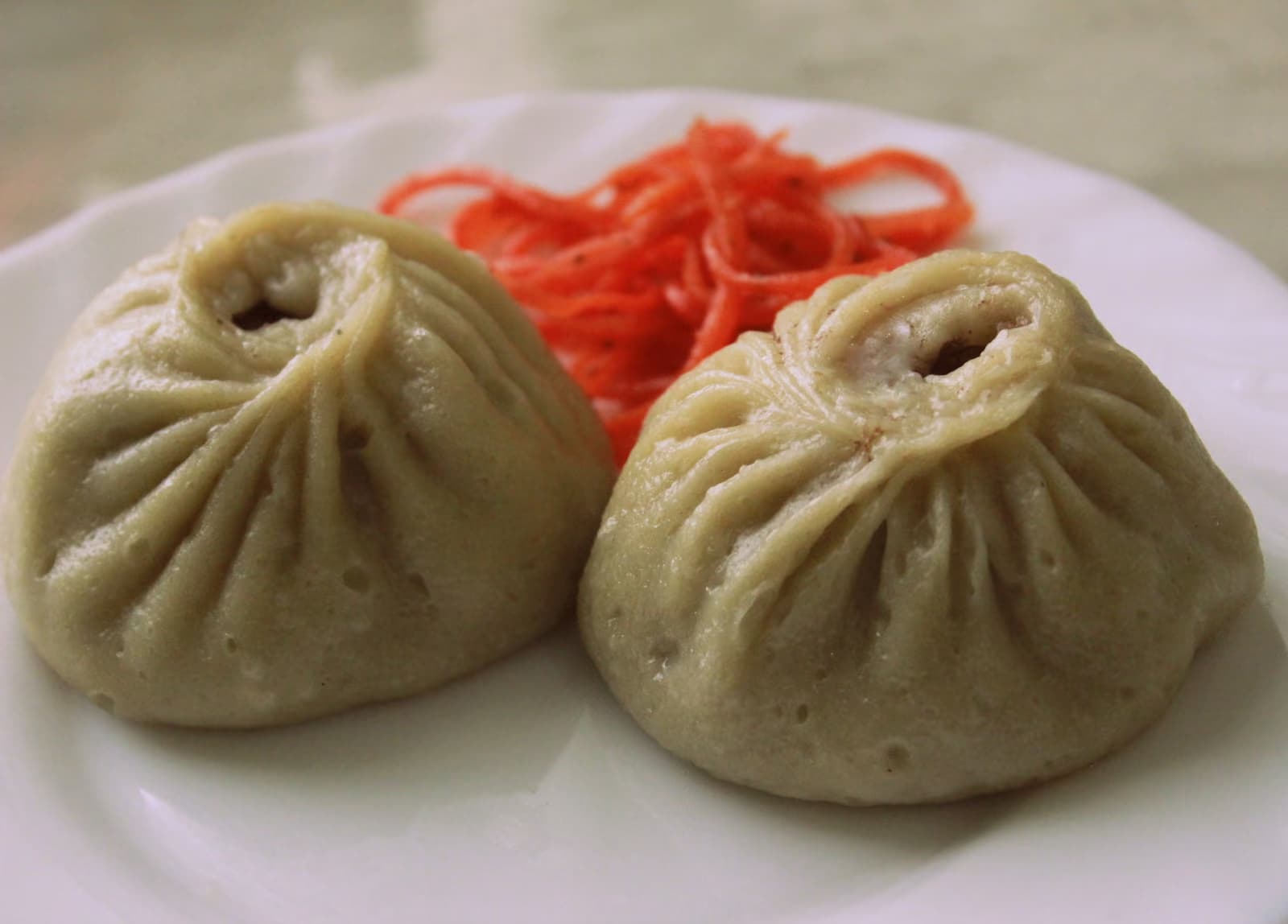
Buuz (Mongolian: ᠪᠤᠤᠵᠠ; Mongolian Cyrillic: бууз; Buryat: Бууза) are a Mongolian culinary specialty.
These are dumplings filled with mutton or beef meat with fat, onions, garlic and salt and pepper. To ensure good stability during cooking, they are mostly frozen before being steamed and eaten by hand. Each family has its own variation of the recipe and its seasonings. The most appreciated buuz are those whose meat has been finely chopped with a knife. During cooking, the fat melts and it is customary and appreciated to drink it first by making a small opening with the teeth on the side of the buuz.
This specialty is particularly prized during Tsagaan Sar, the Mongolian New Year festival. Sometimes the whole family prepares for several weeks hundreds of buuz which are frozen and kept most of the time outside (temperatures often being below −20 °C at this time).
This tradition can be related to the Chinese New Year tradition of eating jiaozi, dumplings from northern China, whose etymology (饺子/餃子) also evokes the change of year.
It is the Mongolian equivalent of Chinese baozi dumplings whose pronunciation is very close. In the same way, mantou, the unfilled version, are called in Mongolian, mantuu (Мантуу).
This dish is referenced in 2 countries on AllGastronomy: Russia, Mongolia. Each of these versions has its own page and its own coordinates. None is designated as the original.
---
Entry compiled automatically from [Wikidata](https://www.wikidata.org/wiki/Q138737434) and Wikipedia. It will be replaced as soon as a contributor submits a cooked recipe.
Where this version sits
A single, final coordinate: Russia. Another version of the same dish, elsewhere, gets its own point.
Photo: Аркадий Зарубин — CC BY-SA 3.0
Other versions of Buuz
Buuz — , which holds 2 versions placed elsewhere. None is presented as the original.