Version from Nigeria
Isi ewu — Nigeria
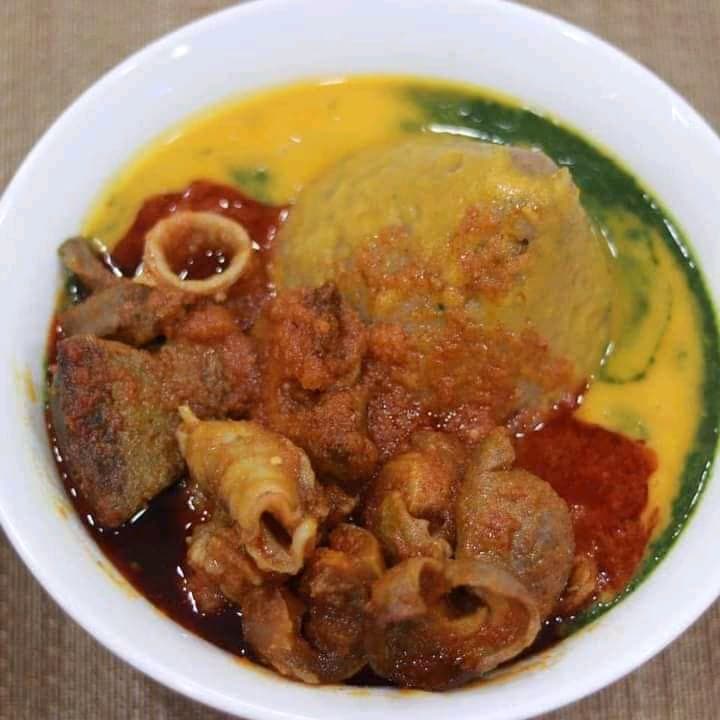
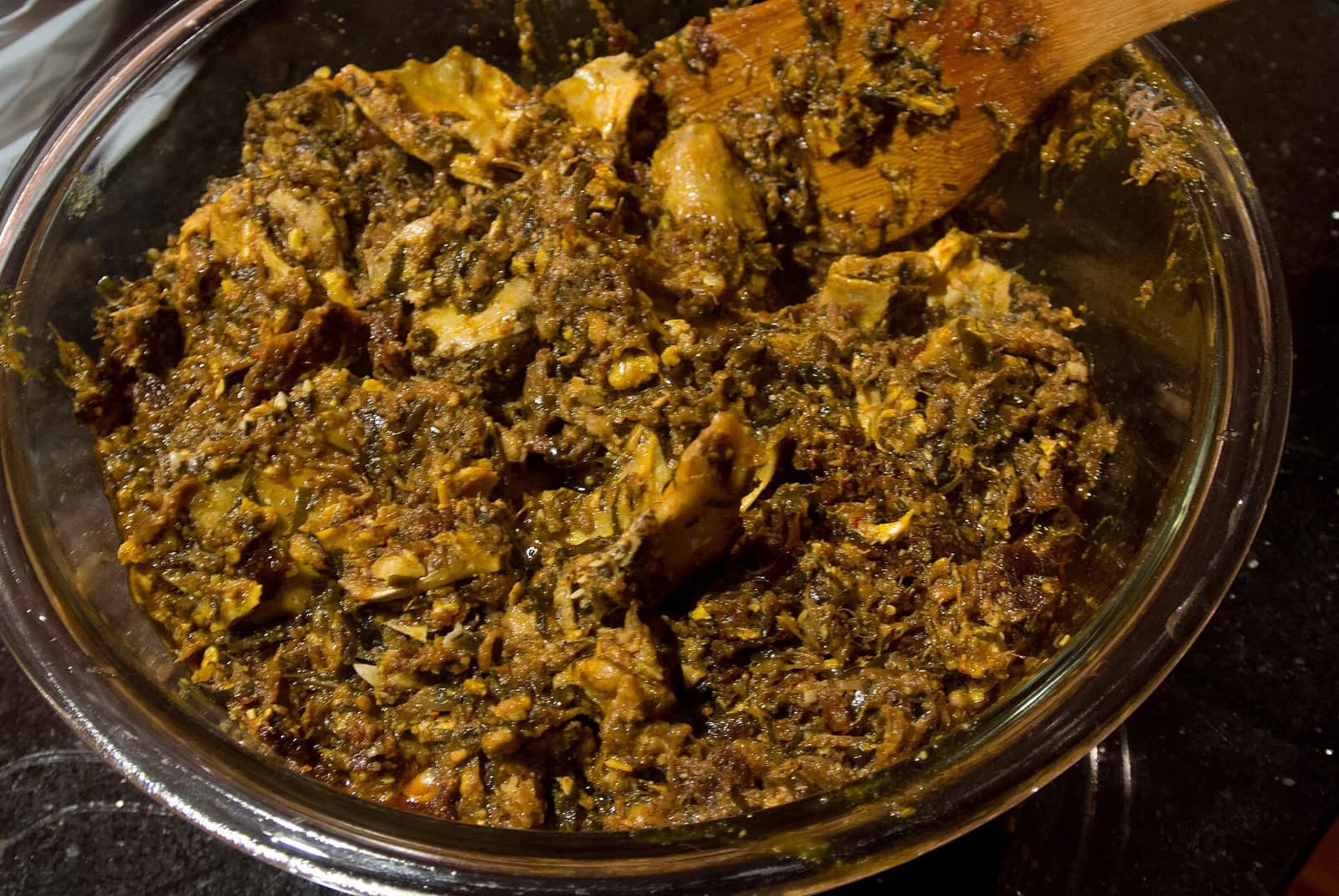
An Igbo dish of goat head cooked until tender, then coated in a spicy sauce of ground utazi, palm oil and potash.
- 40 min
- Prep
- 120 min
- Cook
- 6
- Servings
- Hard
- Difficulty
Isi ewu, meaning goat head in the Igbo language, is a dish built around a whole goat head cooked until the meat and skin are tender, then cut into pieces and coated in a thick, spicy sauce. It sits alongside nkwobi, the related dish made the same way with cow's feet, differing mainly in the cut of meat used.
It is reported from Igbo communities in Nigeria, served at gatherings and in dedicated 'isi ewu' bars and restaurants, often alongside palm wine, and is generally treated as a shared dish for a group rather than an individual portion.
Preparation starts with singeing and thoroughly cleaning the goat head, then boiling it until the meat and skin become tender, sometimes as a whole piece and sometimes cut into manageable sections beforehand to reduce the water needed. The cooking liquid is reduced and mixed with palm oil, ground utazi leaf, ehuru (calabash nutmeg), potash and pepper into a thick sauce, into which the cooked pieces of head are tossed until well coated.
What distinguishes this dish from a plain boiled meat stew is the specific sauce built on utazi leaf and potash, which gives it a distinctive bitter-sharp edge and a slightly gelatinous body from the potash's effect on the palm oil, and the custom of serving it warm, tossed rather than submerged in the sauce.
Preparation
Singe and scrape the goat head thoroughly, then wash it well.
Boil the head in water with a little salt until the meat and skin are tender, then drain, reserving some cooking liquid.
Cut the cooked head into bite-sized pieces.
Warm the palm oil with the dissolved potash, stirring until it lightens in color and thickens slightly.
Stir in the ground utazi, ehuru, chopped scotch bonnet and a little reserved cooking liquid to make a thick sauce.
Toss the pieces of head in the sauce with the sliced onion until well coated, then serve warm.