Version from Central Java, Indonesia
Kue satu — Central Java, Indonesia
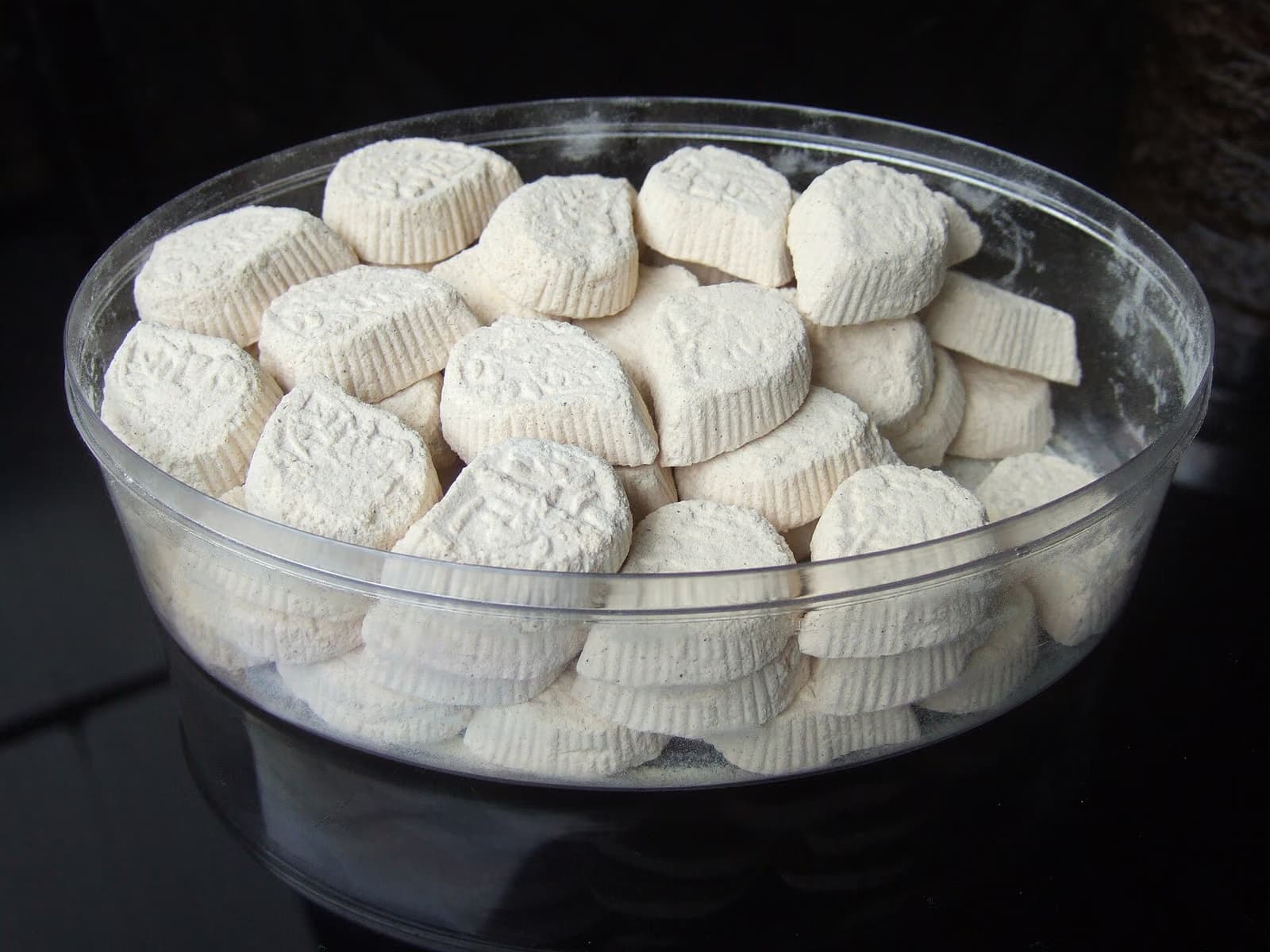
A dry, crumbly mung-bean-powder cookie from Central Java, Indonesia, pressed into small molds and served at festive gatherings.
- 40 min
- Prep
- 20 min
- Cook
- 20
- Servings
- Medium
- Difficulty
Kue satu, also known in some areas as kue koya, is a dry cookie made from sweet, white mung bean powder that crumbles as soon as it is bitten. It belongs to the wider family of kue kering, the dry cookies kept in tins and served over weeks rather than eaten fresh.
It is reported from Central Java, Indonesia, where it is especially common, though the same cookie under either name is found across the island of Java more broadly. It appears at festive occasions such as Lebaran, Natal and Imlek, brought out alongside other dry cookies for guests.
Roasted mung bean flour is sifted with powdered sugar, then bound with a little coconut milk and worked by hand into a mixture that holds its shape under pressure but stays sandy rather than doughy. Small portions are pressed firmly into carved molds, unmolded, and left to dry — either at room temperature or in a very low oven — until firm enough to handle.
Molds vary from one household to another, giving the cookies different shapes and surface patterns, and the ratio of sugar to mung bean flour shifts the sweetness and the crumble. The cookie is generally traced to Chinese Peranakan cookie-making, a background that still shows in its dry, pressed form.
Preparation
Sift the roasted mung bean flour and powdered sugar together into a wide bowl.
Add the salt and vanilla, then drizzle in the coconut milk gradually, rubbing it into the flour with your fingers.
Work the mixture until it holds together when pressed but still feels sandy and light.
Press small portions firmly into a mold, then unmold each piece onto a tray.
Leave the pieces to dry at room temperature, or in a very low oven, until firm enough to handle without crumbling.