Version from Central Java, Indonesia
Onde-onde — Central Java, Indonesia
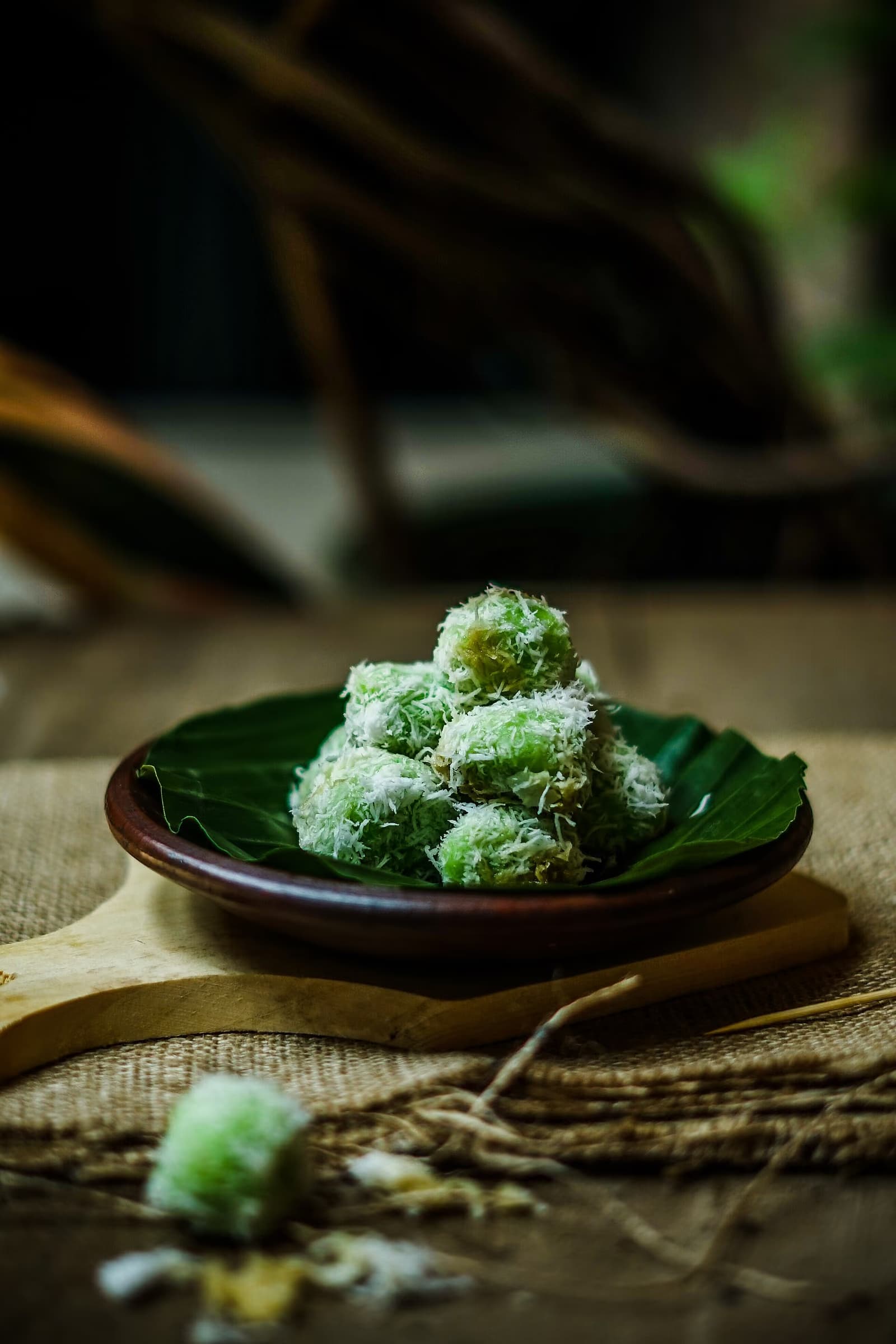
Onde-onde, the regional name given in parts of Indonesia and Malaysia to a pandan-scented rice cake filled with liquid palm sugar and rolled in coconut, prepared here from Central Java.
- 40 min
- Prep
- 15 min
- Cook
- 6
- Servings
- Medium
- Difficulty
Onde-onde, in this regional naming, is a boiled rice cake made from glutinous rice flour coloured and scented with pandan or dracaena leaves, filled with liquid palm sugar and rolled in grated coconut once cooked. Biting into a warm one releases a pocket of hot, syrupy palm sugar at its centre, which is part of the appeal and part of the reason it is eaten carefully.
The cake is reported as originating in Java and carrying different names depending on where it is served: in Sulawesi, Sumatra and in neighbouring Malaysia it is called onde-onde, while in Java itself the same word is more often used for a separate item, a sesame-coated ball filled with sweet mung bean paste of Chinese origin, so the name can point to either cake depending on the region. It is eaten alongside other Javanese snacks such as getuk and cenil, typically in the morning or afternoon, and reached the Netherlands in the 1950s with Indo immigrants, where it is still found in Chinese and Indonesian restaurants and supermarkets.
To prepare it, glutinous rice flour is worked into a dough with pandan juice for colour and scent, then small portions are flattened, filled with a piece of solid palm sugar and sealed into balls. The balls are dropped into boiling water and cooked until they float, which signals that the filling has melted inside, then drained briefly and rolled while still warm in freshly grated coconut so it adheres to the surface.
This Central Java version keeps to the classic green ball filled with palm sugar and coated in coconut, and is served warm shortly after boiling so that the filling stays liquid, in line with how it is eaten as a snack rather than kept for later.
Preparation
Mix the glutinous rice flour with pandan juice, water and salt into a soft dough.
Cut the palm sugar into small solid pieces.
Flatten a small portion of dough in the palm of your hand.
Place a piece of palm sugar in the centre and seal the dough into a ball.
Repeat with the remaining dough and sugar.
Bring a pot of water to a boil.
Drop the balls in and cook until they float to the surface.
Drain briefly and roll the warm balls in grated coconut mixed with a little salt.
Serve warm shortly after rolling.