Version from Indonesia
Ongol-ongol — Indonesia
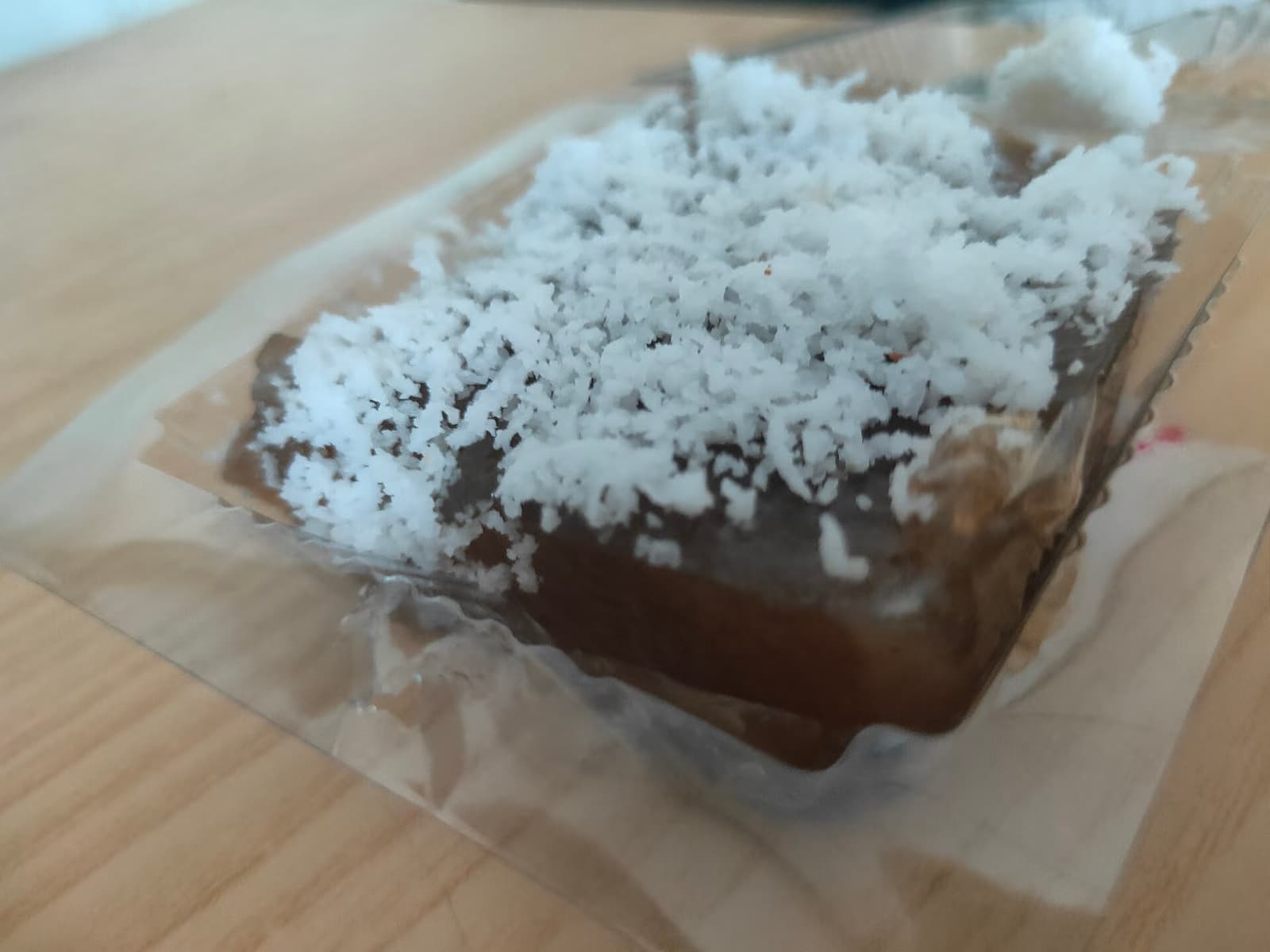
A chewy Indonesian jelly cake of sago or cassava starch and palm sugar, cut into cubes and coated in grated coconut.
- 20 min
- Prep
- 25 min
- Cook
- 6
- Servings
- Medium
- Difficulty
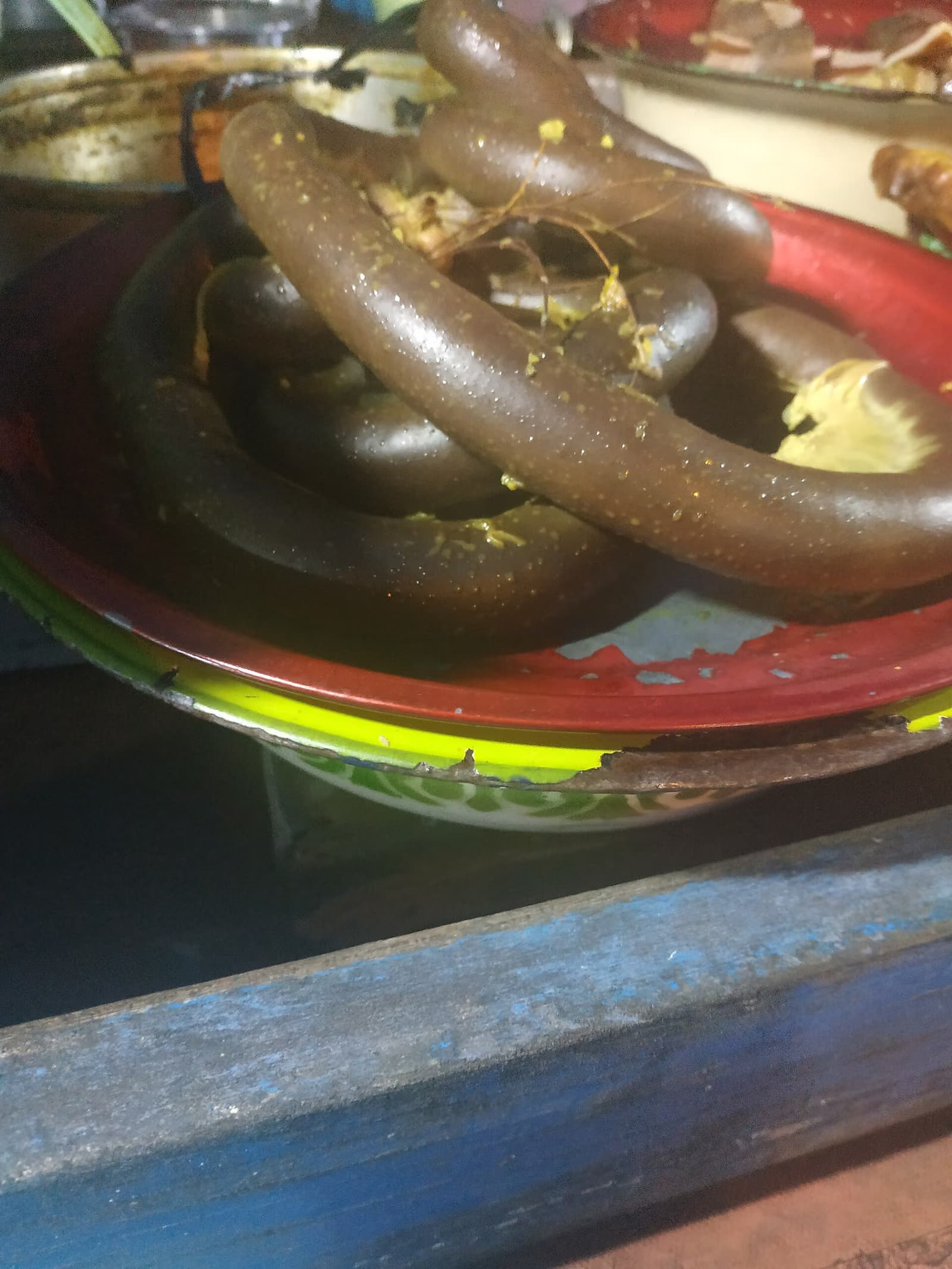
Ongol-ongol is a chewy jelly cake made from sago or cassava starch cooked with palm sugar until it turns a deep brown and sets into a firm, springy block. Once cooled and cut into cubes, the pieces are rolled in grated coconut before serving.
It is found across Indonesia as an everyday sweet, sold from small stalls and home kitchens alike, and is typically eaten as a snack between meals rather than as a dessert course after a meal.
To prepare it, sago or cassava starch is mixed with water and dissolved palm sugar, then cooked over low heat while stirring constantly until the mixture thickens into a thick, glossy, dark paste. It is poured into a lined pan, left to cool and firm up completely, then cut into small cubes. The cubes are rolled in freshly grated coconut, which has usually been lightly steamed and salted, so it clings to the sticky surface.
The starch used changes the texture noticeably: sago gives a springier, more elastic bite, while cassava starch makes a slightly softer cube. The amount of palm sugar also shifts both the color and the sweetness, with some versions cooked longer for a darker, more caramelized flavor and a firmer set.
Preparation
Dissolve the palm sugar in half the water over low heat, then strain to remove impurities.
Mix the starch with the remaining water until smooth.
Combine both mixtures in a pan and add the pandan leaves and a pinch of salt.
Cook over low heat, stirring constantly, until the mixture thickens into a glossy dark paste.
Pour the paste into a lined pan and smooth the top.
Let it cool completely until fully set and firm.
Steam the grated coconut with a little salt for a few minutes, then let it cool.
Cut the set paste into cubes and roll each cube in the grated coconut before serving.