September 27, 2026·4 min read
Carbonara: 2 Versions, from Rome to American Kitchens
Two carbonaras sit side by side in the atlas: one built on guanciale, pecorino and pepper, the other on bacon, parmesan and, in many homes, a splash of cream.
By the AllGastronomy editorial team
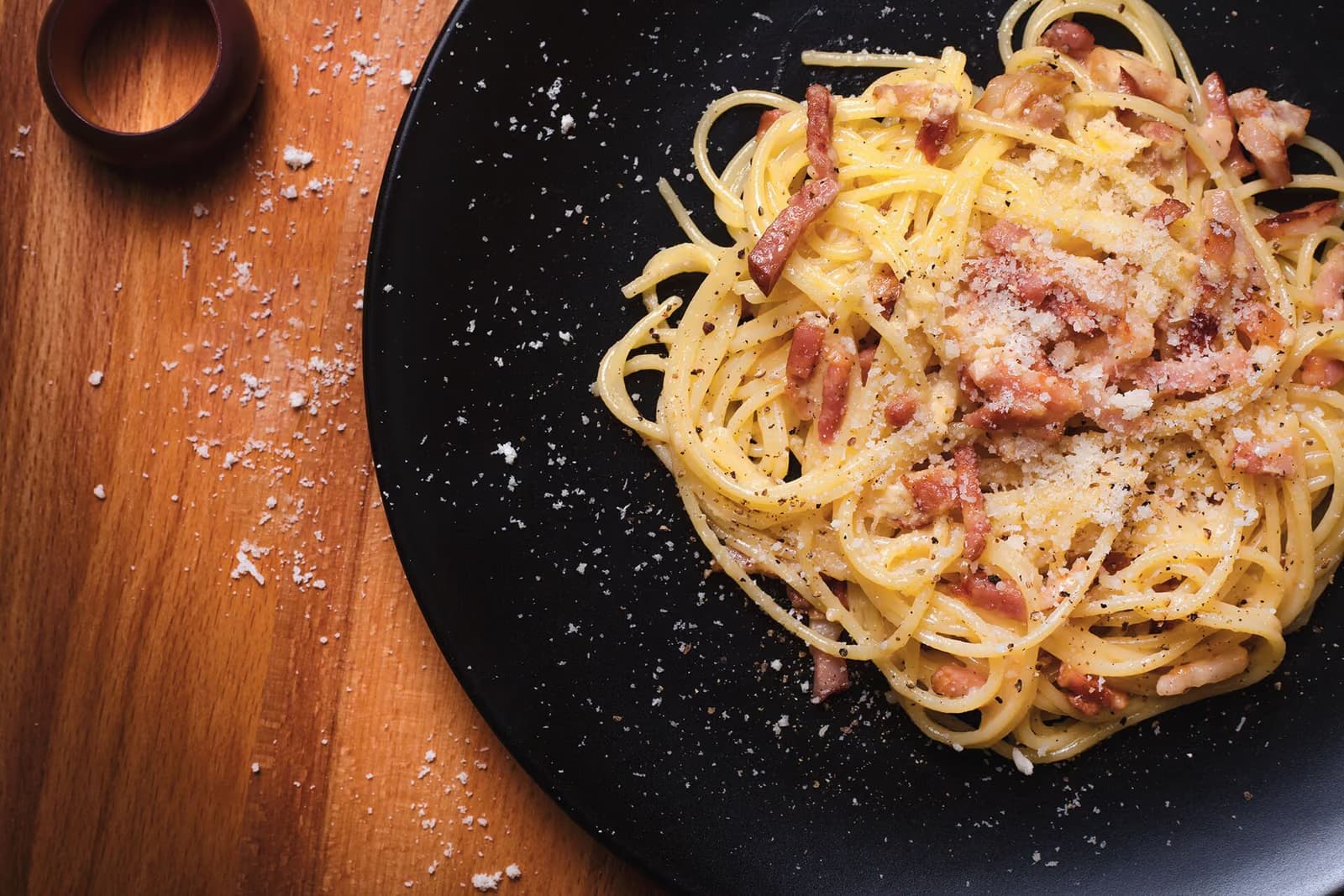
Carbonara exists in the atlas in two documented forms, and the gap between them comes down to four things: the pork, the cheese, the pepper, and whether cream goes in the pan. The Italian version binds spaghetti in an emulsion of egg and pecorino with guanciale and black pepper, no cream. The American version leans on bacon or pancetta with parmesan, and many home recipes stir in cream for a thicker coating. Both are cooked, eaten and argued about by people who grew up with them.
With World Pasta Day about four weeks away, carbonara tends to resurface in menus and home kitchens, which makes it a good moment to look at what each version is actually doing.
What changes between the Italian carbonara and the American one?
Four variables, and they compound. The cured pork shifts from guanciale, the pork jowl, to bacon or pancetta. The cheese shifts from pecorino, a sheep's milk cheese with a salty edge, to parmesan, made from cow's milk and milder. Black pepper is a defining element in one and a seasoning in the other. And cream, absent from the first, is common in the second.
Change the fat and you change the sauce. Guanciale renders a soft, faintly sweet fat that becomes the base of the emulsion. Bacon, usually smoked, brings a different aroma that carries through the whole plate. Neither is a substitution error; each belongs to a kitchen where that pork product was the one on hand.
Carbonara in Italy: guanciale, pecorino, black pepper
The Italian version is a short-ingredient dish that depends almost entirely on technique. Guanciale is cut into strips or cubes and rendered slowly so the fat runs clear and the edges crisp. Eggs are beaten with grated pecorino and a heavy grind of black pepper. The drained pasta goes into the rendered fat, then the egg mixture is added away from direct heat, with a little of the starchy cooking water to loosen it.
The result should coat the strands rather than pool at the bottom of the bowl. There is no cream because the emulsion does that work: egg yolk, cheese, pork fat and starch, worked together while the pasta is still hot enough to thicken them but not hot enough to set them. Spaghetti is the usual shape, though rigatoni and tonnarelli appear across Italy as well.
Carbonara in the United States: bacon, parmesan, and often cream
The American rendition starts from what a supermarket in the United States reliably stocks: bacon, sometimes pancetta, and parmesan. Cream enters many home recipes as insurance. It stabilises the sauce, widens the margin of error at the stove, and gives a richer, heavier finish that is closer to a baked pasta than to a bare emulsion.
That choice has consequences on the plate. Cream mutes the sharpness of the cheese and softens the pepper. Smoked bacon pushes the dish toward something savoury and roasted. Cooks who want a lighter result often reduce the cream to a few spoonfuls and add more cheese, which moves the dish back toward the Italian technique without abandoning the ingredients at hand.
Why did cream become standard in some kitchens?
Practical reasons, mostly. An egg-based emulsion can break in seconds if the pan is too hot, and a home cook working without a heavy skillet or a reliable low flame gets a safer sauce with dairy in it. Cream also holds on a buffet or a reheated plate, which a pure egg emulsion does not.
Restaurant service played a part too. A sauce that can be held for twenty minutes behaves differently from one that must be finished to order, and menus written for volume tend to favour the former. Both approaches are documented in the atlas as versions of the same dish family, not as stages of a single line of descent.
How do you keep the eggs from scrambling?
The rule that matters in both versions is heat management. Pull the pan off the burner before the egg mixture goes in, and let the residual warmth of the pasta and the rendered fat do the thickening. Some cooks tip the pasta into a warmed bowl instead of the pan for more control.
Starchy cooking water is the other lever. A ladleful, added a little at a time while tossing, keeps the sauce fluid and helps it cling. If it tightens too much, more water. If it stays loose, a few more seconds of tossing over very low heat, moving constantly. In the American version with cream, the margin is wider, but the same order of operations applies.
Which one should you cook?
Depends on the pantry and the result you want. Guanciale and pecorino give a sharper, saltier plate with a pronounced pepper note. Bacon, parmesan and cream give something rounder and smoky. A cook with bacon on hand and no cream can still work the emulsion method; a cook with guanciale can still add a spoon of cream if that is the texture they grew up with.
Two entries, two sets of ingredients, two ways of handling the same few minutes at the stove. The atlas keeps both on the page, side by side, and leaves the ranking to whoever is holding the fork.
The recipes in this article
Frequently asked questions
- What is the difference between Italian and American carbonara?
- The Italian version uses guanciale, pecorino, eggs and black pepper, bound into an emulsion without cream. The American version commonly uses bacon or pancetta with parmesan, and many home recipes add cream for a thicker, richer sauce.
- Can you make carbonara without guanciale?
- Yes. Pancetta and bacon are both used, and they change the result: pancetta is unsmoked and closer in character to guanciale, while bacon adds a smoky note that carries through the whole plate.
- Why do some carbonara recipes use cream?
- Cream stabilises the sauce and makes it far harder to break, which matters for home cooks without a low, steady flame and for kitchens that need a sauce to hold rather than be finished to order.
- How do you stop carbonara eggs from scrambling?
- Take the pan off the heat before adding the beaten eggs and cheese, then toss the hot pasta with a little starchy cooking water until the sauce thickens and coats the strands.
- Is pecorino or parmesan used in carbonara?
- Both appear, depending on the version. Pecorino is the sheep's milk cheese used in the Italian recipe and brings more salt and sharpness; parmesan, made from cow's milk, is milder and is standard in the American rendition.