4 octobre 2026·4 min de lecture
Salt Potatoes: 2 Versions, from the US to Germany
Two potatoes, two salt levels, two textures. The American version builds a white crust in brine; the German one keeps the water simply salted and leans on butter and herbs.
Par la rédaction d'AllGastronomy
Salt potatoes exist in at least two distinct forms in the atlas, and the difference comes down to how much salt goes into the pot. The American version uses small new potatoes boiled whole in water so heavily salted that a thin white crust forms on the skin as they dry; the German version uses peeled potatoes simmered in ordinary salted water until tender, then finished with butter and chopped herbs. Same name, same two main ingredients, two different results on the plate.
The timing of this comparison is incidental but convenient: Oktoberfest is running, and boiled buttered potatoes sit on a great many German tables through the autumn. That is one context among several, not the whole story of the dish.
What actually separates the two salt potato versions?
Salt concentration, skin, and finish. In the United States method, the brine is strong enough that it changes the surface of the potato. The salt raises the boiling point slightly, the starch sets differently, and when the potatoes come out and sit for a minute, the water evaporates and leaves a matte, chalky film. The skin stays on throughout.
In Germany, the potatoes are peeled first and the water is salted the way you would salt pasta water. Nothing crusts. The potatoes come out smooth, pale yellow, and absorbent, ready for butter and herbs or for whatever sauce is next to them.
Both belong to the same salt potatoes family in the sense that salted water is the only cooking medium. Neither is a variation on the other; they come from different kitchen logics.
How are salt potatoes made in the United States?
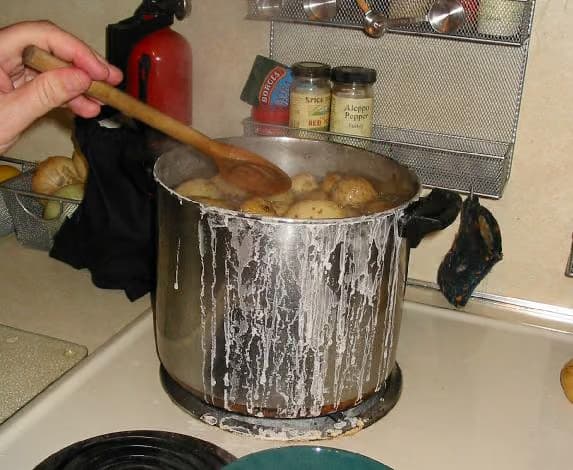
Small new potatoes, whole and unpeeled, go into a pot with a heavy dose of salt. The quantity is far beyond seasoning levels — this is brine, not seasoned water. They boil until a fork slides in without resistance, usually in the range of fifteen to twenty-five minutes depending on size.
What happens next matters as much as the boil. The potatoes are drained and left to steam dry for a moment. As the surface moisture goes, the dissolved salt stays behind and dries into that thin crust. The inside, protected by the skin, is creamier than a plainly boiled potato, partly because the dense cooking water keeps the flesh from waterlogging.
They are served hot with melted butter, often poured over rather than stirred in. The butter cuts through the salted exterior; the skin holds everything together.
What makes the German version a different dish?
Peeling. Once the skin is off, the potato has no barrier, so very salty water would season it all the way through and make it inedible. German Salzkartoffeln use a moderate amount of salt and a gentle simmer rather than a hard rolling boil, which keeps the pieces from breaking apart at the edges.
The finish is butter and chopped herbs — parsley most often, sometimes chives. The herbs go on at the last moment so they stay green. This is a side dish by design: it sits beside roast meat, sausages, fish, or anything with gravy, and its job is to carry the rest of the plate rather than lead it.
Mealy, floury varieties tend to be chosen for this, which is part of why the result is soft and slightly absorbent rather than waxy and firm.
Which potatoes work for each method?
- For the American method: small, waxy new potatoes, roughly uniform in size so they cook evenly. The skin needs to be thin and intact.
- For the German method: medium floury or all-purpose potatoes, peeled and often halved or quartered if large.
Size uniformity matters more in the first case, since whole potatoes of different diameters finish at different times and the crust only forms properly on fully cooked ones.
Can you salt the water that heavily without the potatoes turning inedible?
With the skin on, yes. The skin acts as a partial barrier, so most of the salt stays outside. The flesh is seasoned but not aggressively so; the strong salinity lives on the surface, which is exactly why melted butter is the standard accompaniment. Try the same brine with peeled potatoes and the result is a different matter entirely.
This is the practical reason the two versions diverged into separate techniques rather than one adjustable recipe.
When is each one served?
The American version turns up at outdoor meals, clambakes, and summer cookouts, served from a bowl alongside grilled or boiled seafood and corn. It travels well and holds heat.
The German version is an everyday weekday side, on the table year-round and especially through the cooler months, including the beer-tent season now under way. It is cooked in quantity, drained, buttered, and passed around.
Two pots of salted water, two outcomes, two sets of habits around them. Neither is mised above the other here — aucune n'est mise au-dessus des autres, and none of them serves as the reference point for the rest.
Les recettes de cet article
Questions fréquentes
- What is the difference between American salt potatoes and German Salzkartoffeln?
- American salt potatoes are small unpeeled potatoes boiled in heavily salted brine until a thin salt crust dries on the skin, then served with melted butter. German Salzkartoffeln are peeled potatoes simmered in lightly salted water and finished with butter and chopped herbs, with no crust.
- Why do salt potatoes form a white crust?
- The cooking water is saturated with salt. When the drained potatoes steam dry, the water evaporates from the skin and leaves the dissolved salt behind as a thin, chalky film.
- Can you use peeled potatoes for the heavily salted version?
- It is not advisable. Without the skin acting as a barrier, the flesh absorbs far more salt and the result is overwhelming. The brine method relies on the skin staying intact.
- What potatoes should I use for salt potatoes?
- Small waxy new potatoes of even size suit the brined American method, since they cook through at the same rate. Floury or all-purpose potatoes are more common for the peeled German side dish.
- What do you serve with salt potatoes?
- The American version appears with seafood and grilled food at outdoor meals. The German version accompanies roast meat, sausages, or fish, usually alongside something with sauce or gravy.