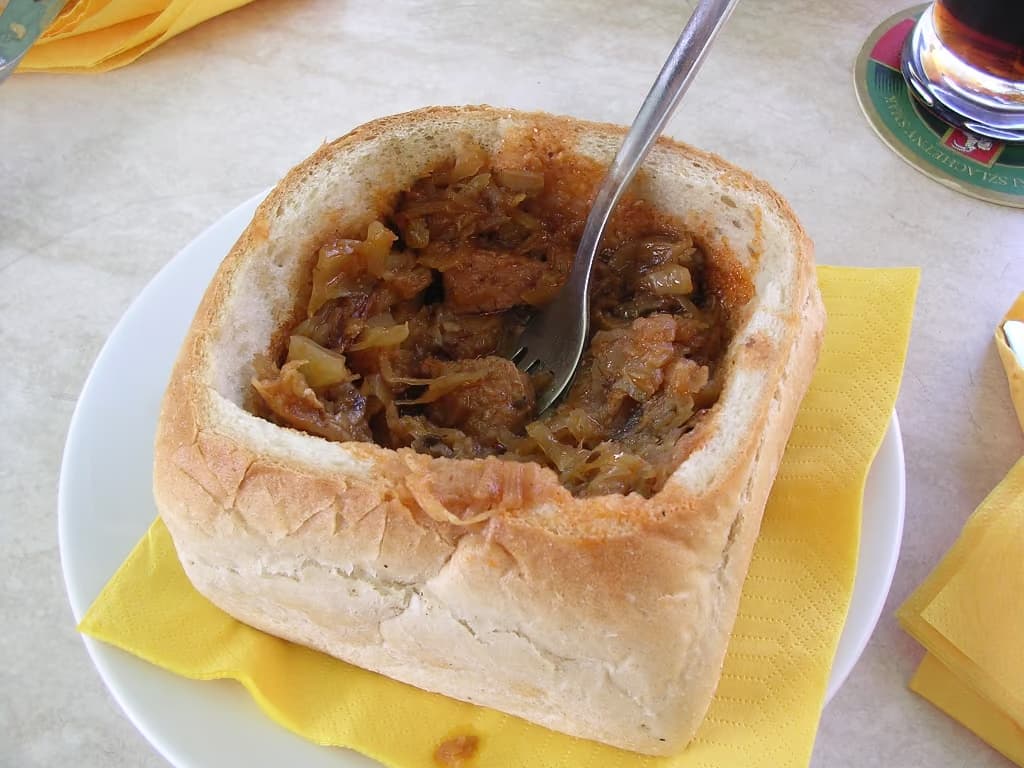
Bigos is a stew built on a mix of sauerkraut and fresh cabbage, simmered for a long time with several kinds of meat and smoked sausage until the layers of flavor merge into a dense, dark mixture. The finished dish is thick enough to hold its shape on a plate, with the cabbage cooked down until soft and faintly sweet-sour.
The dish is closely associated with Polish home cooking and appears widely in winter, especially around Christmas and in the days that follow, when it is served at family gatherings and festive tables across the country. It is eaten as a main course on its own or offered as a hot side alongside bread or potatoes.
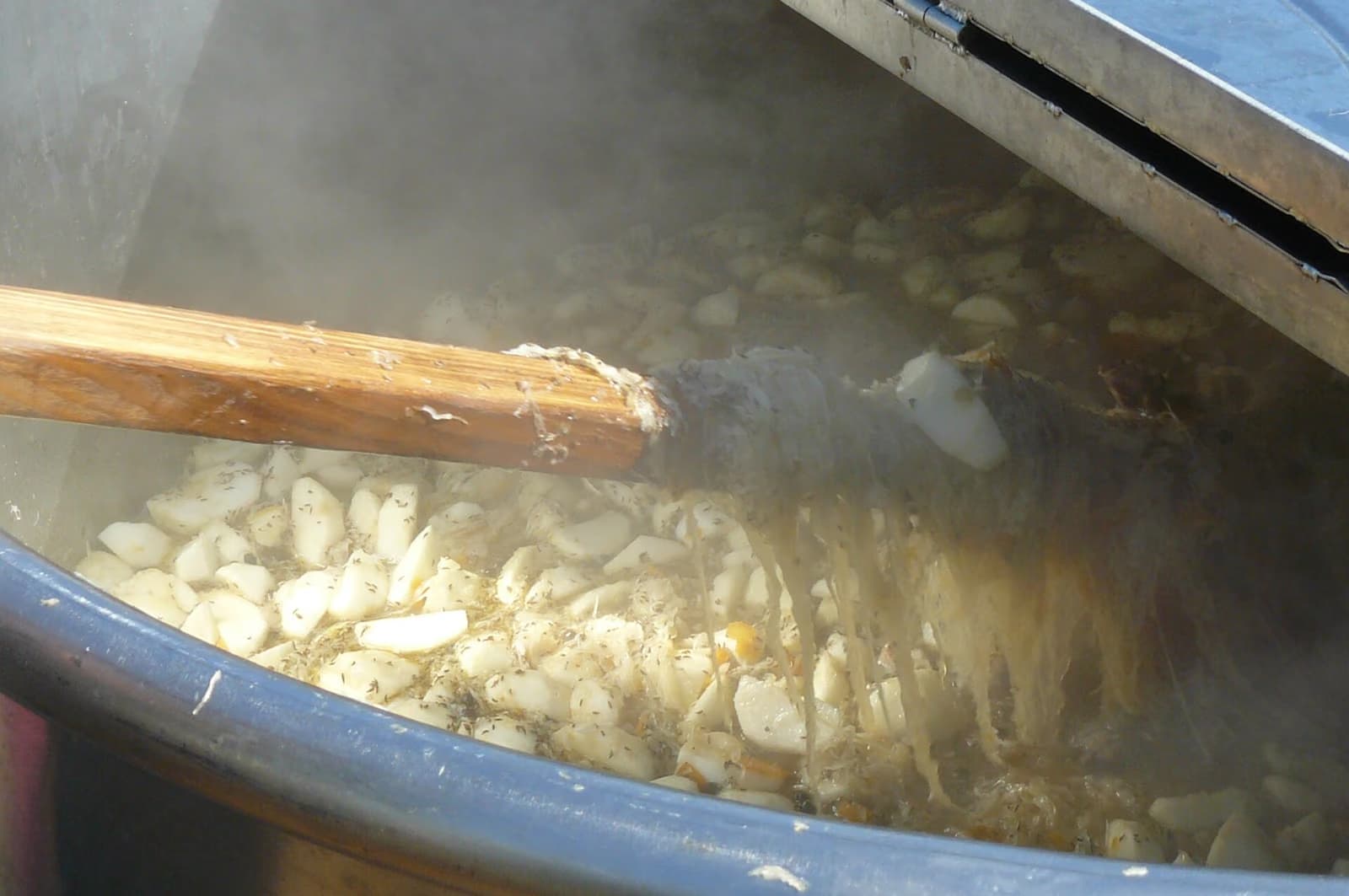
To prepare it, fresh cabbage is shredded and wilted separately, then combined with drained sauerkraut in a large pot. Cubed pork, beef, or game, along with smoked sausage and bacon, are added in layers with soaked dried mushrooms, chopped onion, juniper berries, bay leaf, and marjoram. The pot is covered and simmered gently for several hours, sometimes resting overnight and being reheated the next day, with a splash of dry red wine stirred in toward the end of cooking.
From one household to another, the balance shifts: some cooks add a handful of pitted prunes for a mild sweetness, others lean on wild mushrooms for a deeper, earthier note, and the proportion of sauerkraut to fresh cabbage varies with personal taste. Many agree that the stew gains character each time it is reheated, which is why large batches are common.
Preparation
1
Soak the dried mushrooms in warm water for 30 minutes, then drain and chop them.
2
Shred the fresh cabbage and wilt it in a large pot with a little oil for about 10 minutes.
3
Add the drained sauerkraut, chopped onion, juniper berries, bay leaves, and marjoram.
4
Layer in the cubed pork, sliced sausage, diced bacon, and soaked mushrooms.
5
Pour in enough water to almost cover the mixture, cover, and simmer gently for 2 hours, stirring occasionally.
6
Stir in the red wine during the final 20 minutes and season with salt and pepper.
7
Let the stew rest and reheat it the next day before serving, which deepens the flavor.