Menu
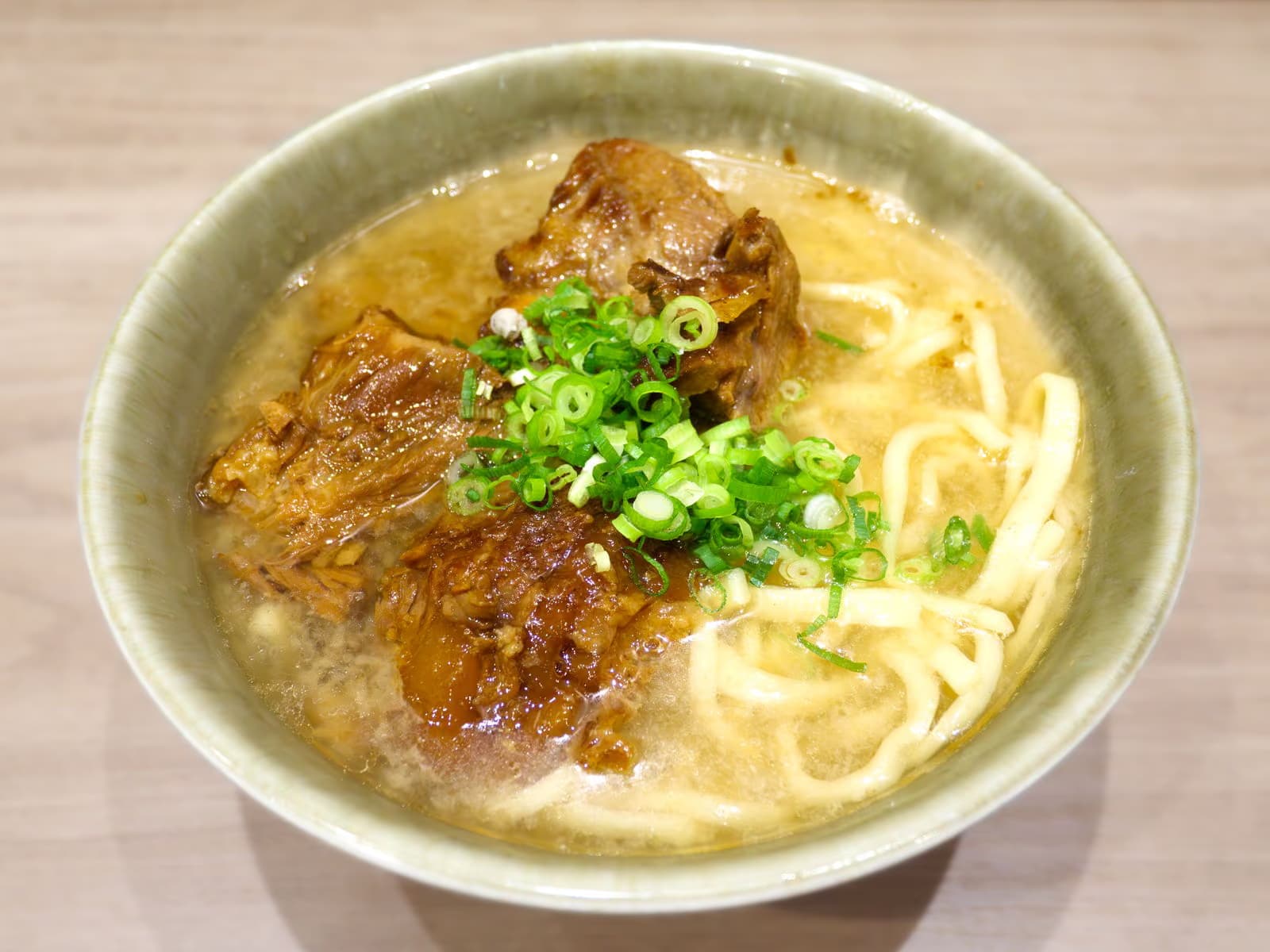
Okinawa soba — Okinawa Prefecture, Japan
Photo: くろふね — CC BY 4.0

Version from Okinawa Prefecture, Japan

Okinawa soba — Okinawa Prefecture, Japan

Thick wheat noodles with no buckwheat, served in a pork and katsuobushi broth topped with stewed pork belly or ribs, kamaboko and pickled ginger.

20 min
Prep
130 min
Cook
4
Servings
Medium
Difficulty
Okinawa soba is a noodle dish whose noodles are made entirely from wheat flour, despite the name soba, which elsewhere in Japan refers to buckwheat noodles. The noodles are thick, closer in texture to udon, and are served in a broth flavored with konbu seaweed, katsuobushi flakes and pork. It is reported from Okinawa Prefecture, where it is a regional trademark associated with the Okinawa Noodle Manufacturing Co-op, and it is often simply called soba, or suba in the Okinawan language. Noodle cross-sections tend to be round in the Yaeyama Islands and slightly flatter across the rest of the prefecture. The broth is built by simmering pork bones and katsuobushi with konbu until it turns rich and clear-ish, then seasoned to taste. A thick slice of stewed pork belly, called sanmai niku, or boneless pork ribs called soki, is laid over the noodles, along with kamaboko fish cake and sliced scallion, with pickled ginger, beni shōga, on the side. Variants are named for their topping, such as sōki soba, finished with extra stewed ribs, or tebichi soba, topped instead with stewed pig's trotters. Diners commonly finish the bowl with a few drops of kōrēgūsu, a condiment of chilli peppers steeped in awamori rice liquor, which each table adjusts to its own taste for heat.

Preparation

  1. Simmer the pork bones and pork belly with konbu in a large pot of water for about two hours.

  2. Remove the pork belly, slice it thickly, and set it aside.

  3. Strain the broth, add the katsuobushi flakes, and simmer briefly before straining again.

  4. Season the broth with soy sauce and salt to taste.

  5. Cook the wheat noodles in boiling water until tender, then drain.

  6. Divide the noodles among bowls and ladle the hot broth over them.

  7. Top each bowl with a slice of pork belly, kamaboko and sliced scallion.

  8. Serve with pickled ginger on the side and a few drops of kōrēgūsu for those who want extra heat.
More recipes from Japan

All recipes from Japan