Version from Bordeaux, France
Canelé — Bordeaux, France
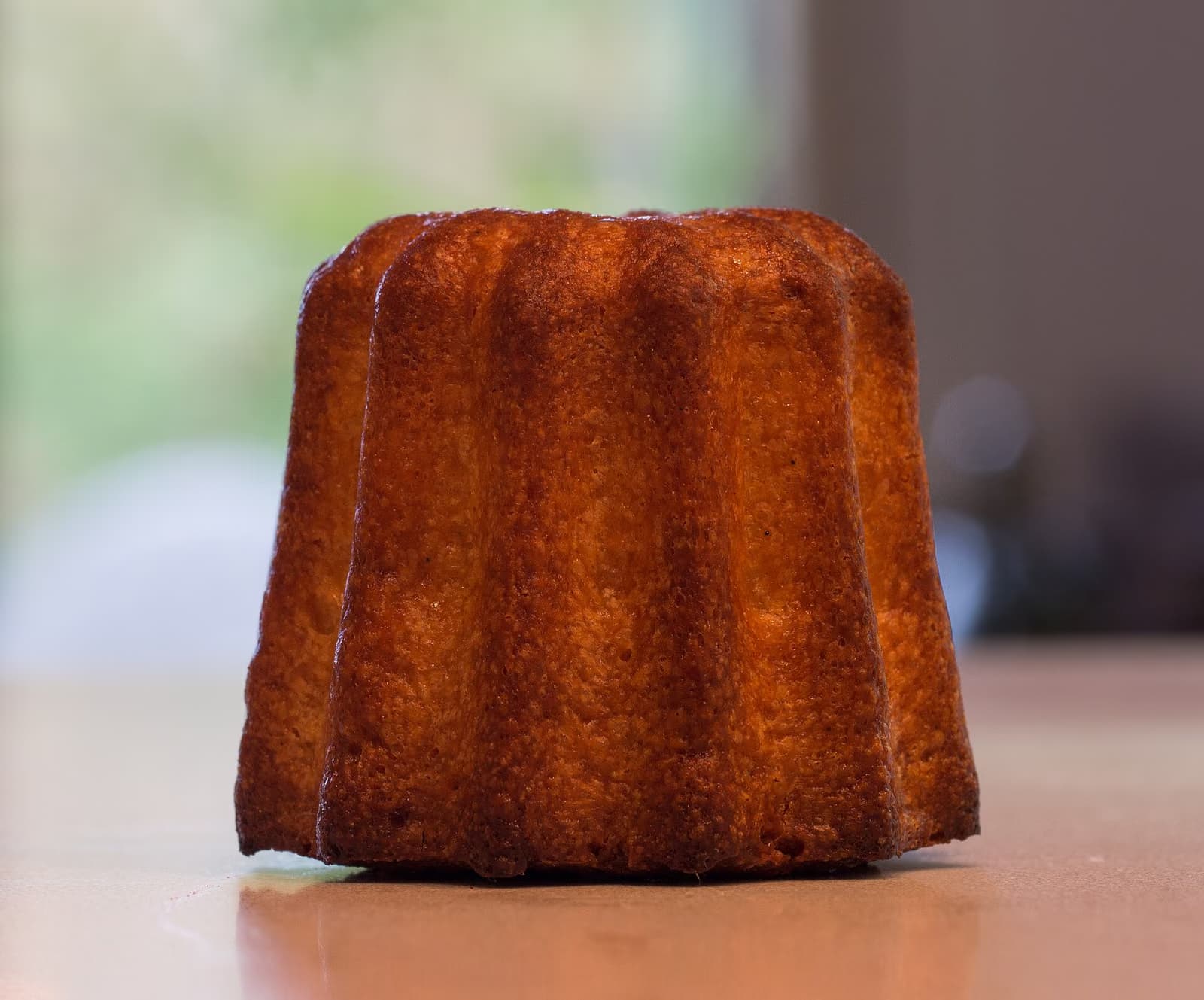
A small Bordeaux cake with a caramelised, almost black crust and a soft, custardy centre, flavoured with rum and vanilla and baked in a fluted copper mould.
- 40 min
- Prep
- 60 min
- Cook
- 12
- Servings
- Medium
- Difficulty
A canelé is a small cake defined as much by its mould as by its batter: a fluted, cone-shaped copper tin, waxed before baking, which gives the cake its dark, hard, almost caramelised shell around a soft, custard-like centre.
It is reported from Bordeaux, where its history is tied to two different periods rather than one clear start: 18th-century convents are said to have used egg yolks left over after fining wine with egg whites, and the cake as it is eaten today owes much of its spread to a guild that revived it in the 1980s.
A thin batter, closer to a thick crêpe mix than a cake batter, is made from milk infused with vanilla, eggs and extra yolks, sugar, flour, salt and rum, and left to rest in the fridge for a day so the flour fully hydrates. The moulds are coated with a mix of melted beeswax and butter, chilled, then filled only three-quarters full. Baking runs in two stages: a very hot start to set and colour the crust, followed by a longer, gentler stage so the inside cooks through without drying out.
What sets a canelé apart from other small egg-and-milk cakes is this deliberate two-stage bake and the hard, dark crust it produces, contrasting with a centre that should stay soft and faintly wobbly, almost like a custard, rather than crumbly like a sponge.
Preparation
Heat the milk with the split vanilla bean and the butter. Mix the sugar, flour and salt, add the eggs and yolks, then the warm milk in a thin stream, then the rum. Rest for 24 hours in the fridge.
Coat the moulds with a melted mix of wax and butter, then place them in the freezer for 10 minutes.
Fill the moulds three-quarters full. Bake for 15 minutes at 240°C, then 45 minutes at 180°C.
Unmould while hot. The crust should be brown, almost black, and the inside soft.