Version from Vietnam
bánh đậu xanh — Vietnam
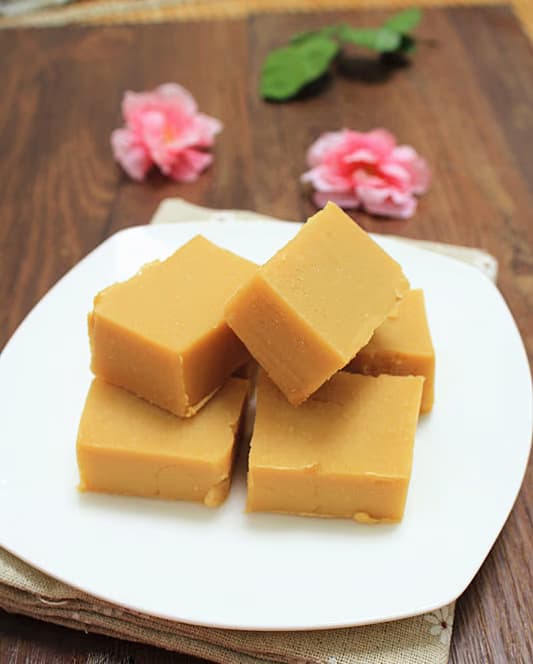
A dry, powdery mung bean pastry pressed into small blocks with sugar and fat, a specialty of Hải Dương province in northern Vietnam, served with green tea.
- 60 min
- Prep
- 40 min
- Cook
- 8
- Servings
- Medium
- Difficulty
Bánh đậu xanh is a type of bánh, or cake, made from mung bean, sugar and fat, either lard or vegetable oil. The beans are cooked, dried and ground into a fine flour, then worked with sugar and fat into a firm dough that is pressed into small blocks.
It is reported as a specialty of Hải Dương province in northern Vietnam, where it is sold in stacks of paper-wrapped blocks and often bought as a gift or souvenir. It is commonly eaten alongside green tea.
Mung beans are soaked, steamed or boiled until soft, then have their skins removed, are dried and ground into a very fine flour. This flour is cooked with sugar and fat over gentle heat into a smooth dough, which is pressed into small molds, cut into squares and wrapped individually.
The ratio of lard to vegetable oil changes both the texture and the keeping quality of the finished blocks. Related sweets exist elsewhere in Asia: in China, lüdou gao is a dry mung bean pastry while lüdou huang is wet and fermented, and in Indonesia, ongol-ongol hunkwe is made from mung bean starch, coconut milk and palm sugar. Bánh đậu xanh is set apart by its dry, compact, melt-in-the-mouth crumb.
Preparation
Soak the hulled mung beans in water for at least four hours.
Steam the beans until completely soft, about 30 minutes.
Spread the beans out and let them dry, then grind them into a very fine flour.
Warm the fat gently in a pan and stir in the sugar and salt until dissolved.
Add the mung bean flour and knead the mixture over low heat into a smooth, firm dough.
Dust small molds with corn starch and press the dough firmly into them.
Unmold the blocks once firm, and wrap each one individually in paper.