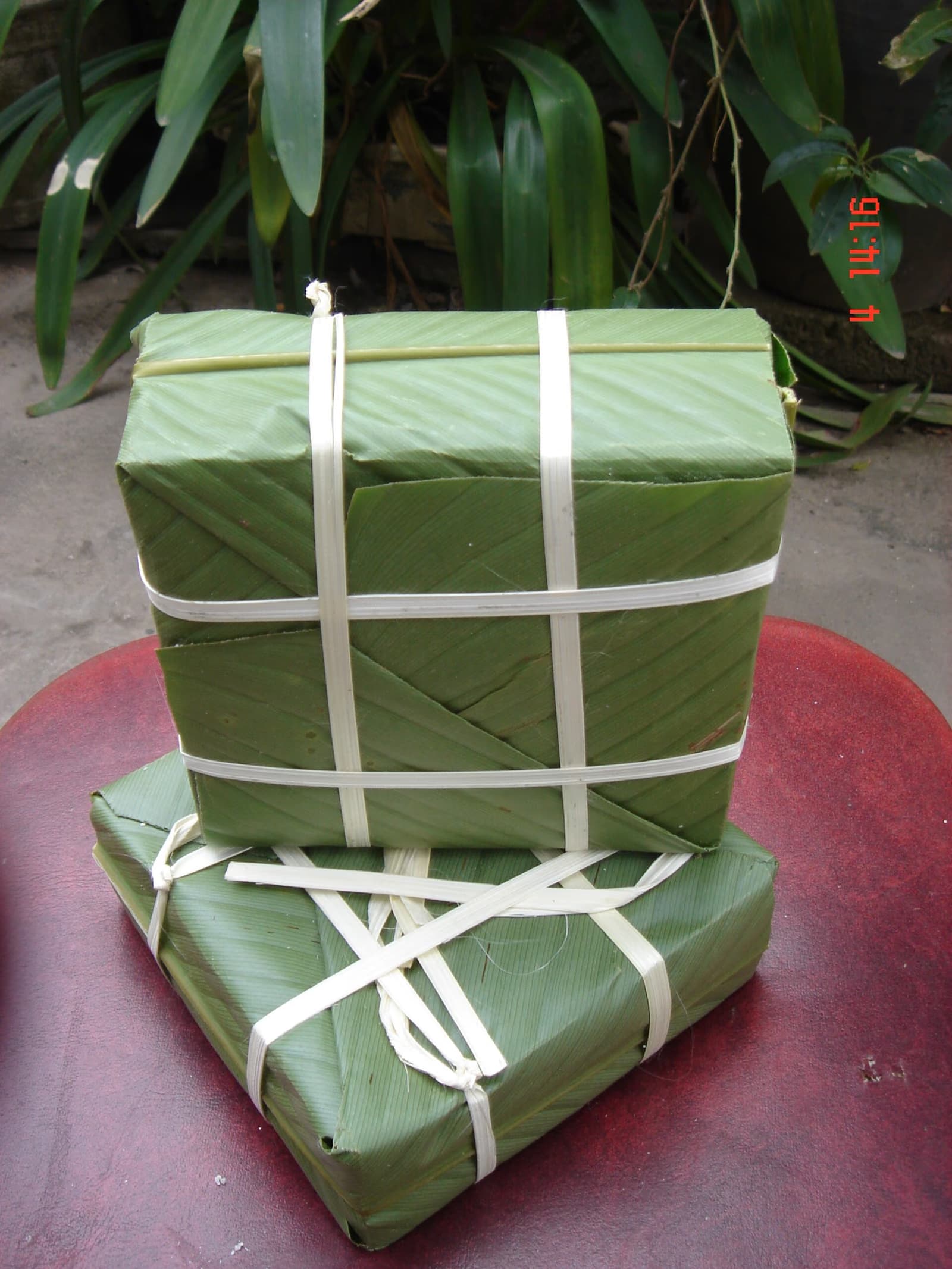
Bánh chưng is a square rice cake built from glutinous rice, split mung beans and a piece of fatty pork, enclosed in green dong leaves and bound with thin strips of bamboo. The square shape is meant to recall the earth, a symbolism that is often paired with the round bánh giầy said to represent the sky. Inside, the rice forms a firm, slightly chewy shell around a core of mashed mung bean and pork belly seasoned simply with black pepper and salt.
The cake is reported across Vietnam, most visibly around the Tết lunar new year, when households gather to wrap dozens of cakes at once and take turns tending the pot through the night. According to sources, the dish is tied to a legend involving Lang Liêu, a prince who is said to have offered his family a rice cake as a mark of respect for the land that feeds them; the story is retold more as an explanation of the shape than as a firm historical record.
Preparation starts a day ahead: the rice is soaked for several hours, the mung beans are steamed and mashed, and the pork belly is cut into strips and rubbed with pepper. The dong leaves are wiped clean, layered to form a leakproof pocket, and packed tightly with rice, bean paste, pork, then more rice before being folded into a square and tied firmly with bamboo string. The parcels are lowered into a large pot of water and boiled for eight to ten hours, with water topped up regularly, then pressed under a weight as they cool so the filling sets evenly.
What marks this version is the proportion of fat kept in the pork and the thickness of the rice shell, which some households keep generous and others pare down; where dong leaves are scarce, banana leaves are used instead without changing the method. The cake is sliced into wedges with its own string and served at room temperature, often alongside pickled vegetables and pickled shallots to cut through the richness of the pork and rice.
Preparation
1
Soak the sticky rice in water for at least four hours, then drain.
2
Steam the split mung beans until soft, then mash them into a coarse paste.
3
Cut the pork belly into strips and rub with black pepper and salt.
4
Wipe the dong leaves clean and layer them to form a leakproof square pocket.
5
Fill the leaf pocket with a layer of rice, a layer of mung bean paste, the pork, more paste, then a final layer of rice.
6
Fold the leaves into a firm square and tie tightly with bamboo string.
7
Lower the parcels into a large pot of water and boil for eight to ten hours, topping up water as needed.
8
Lift the cakes out, press them under a weight while they cool, then slice into wedges to serve.