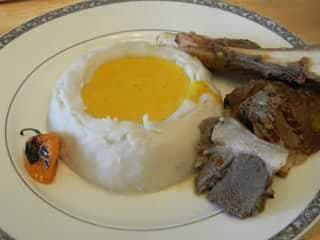
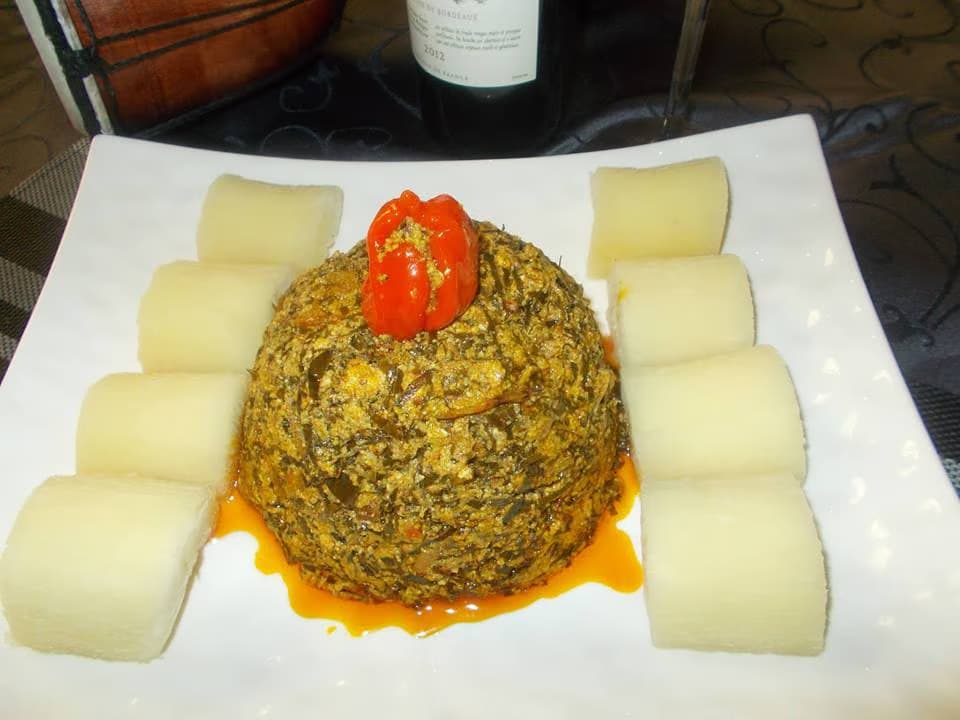
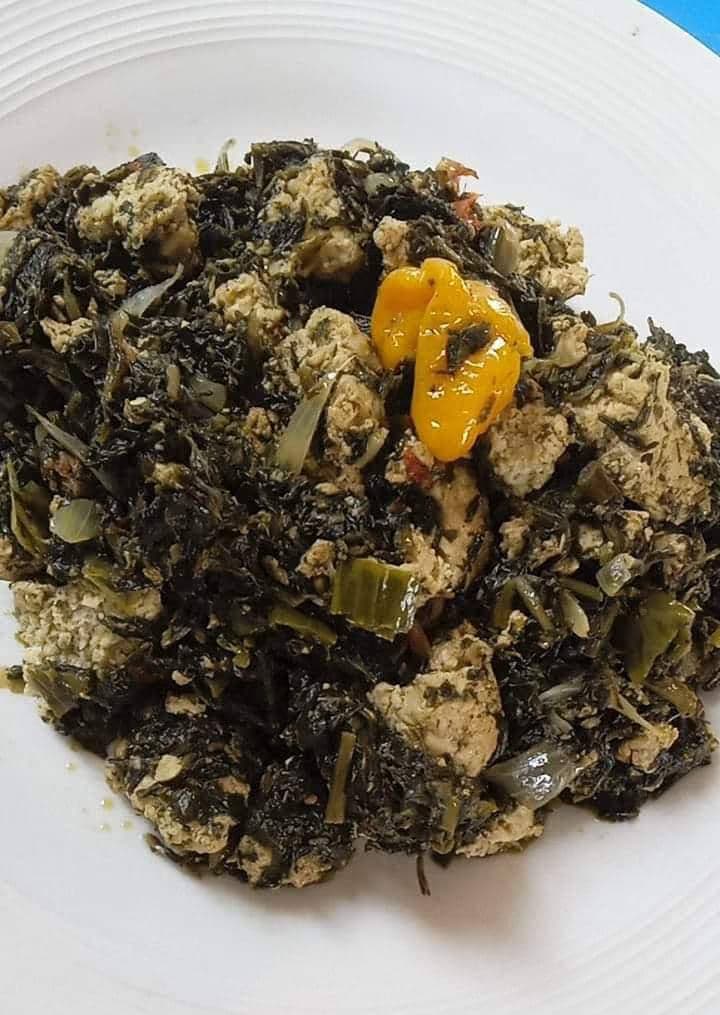
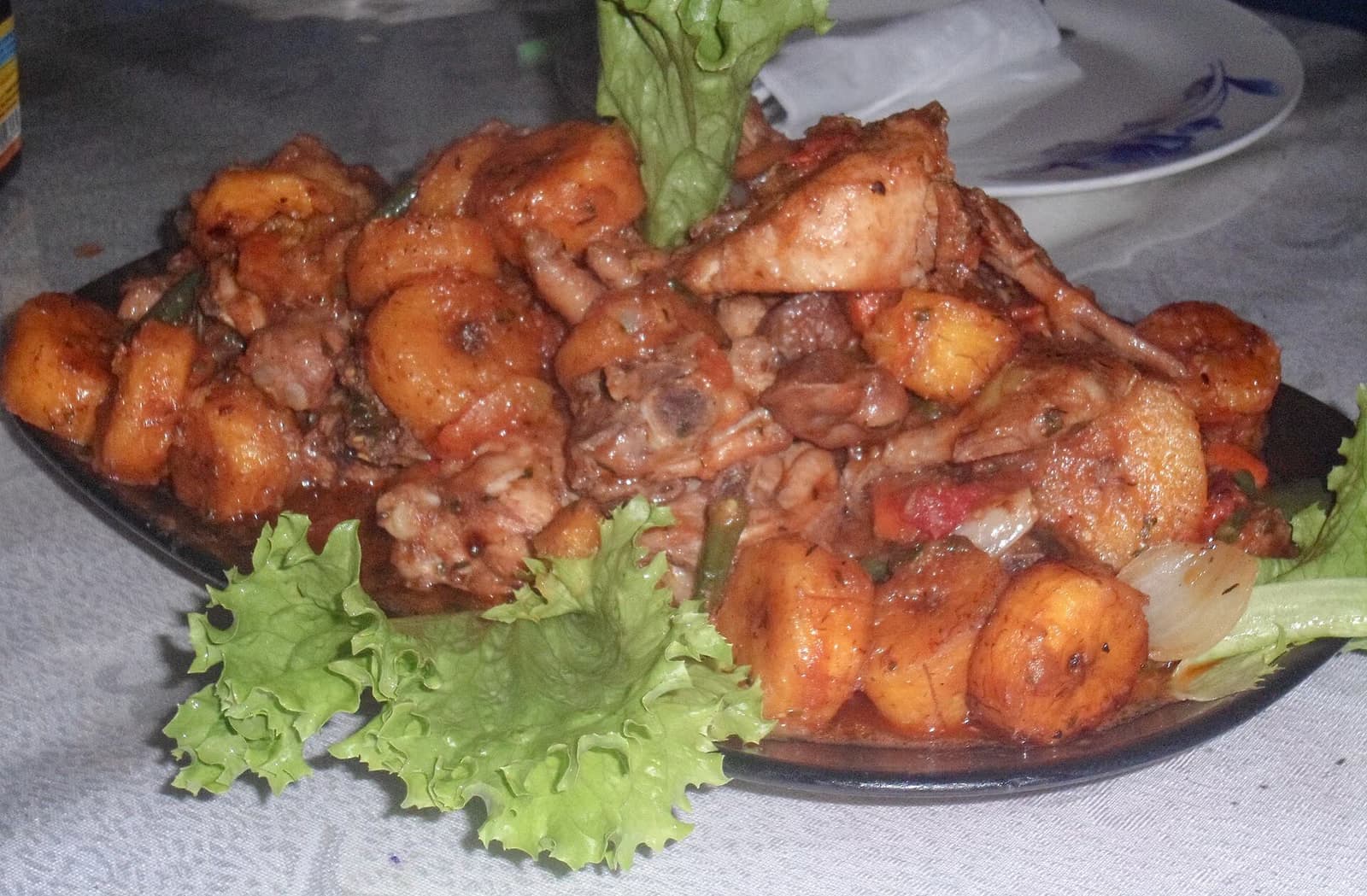
A Grassfields dish from Cameroon's North-West Region: taro pounded to a smooth paste, served with a thick yellow palm-oil sauce of beef, tripe and smoked fish.
Taro with yellow sauce, known locally as achu, is a dish from the Grassfields of Cameroon's North-West Region, built around cocoyam or taro pounded to a smooth, grayish paste and served under a bright yellow sauce. It belongs to the wider family of pounded-starch dishes found across Central and West Africa, where a neutral, dense paste is paired with a strongly flavoured sauce and eaten by hand.
The dish is reported from the Bamenda highlands, where taro grows well in the cool, wet climate and where achu holds a place at community and ceremonial gatherings as much as at the everyday table. It is closely tied to the Grassfields culture of the North-West Region, where large shared platters of achu are served at gatherings that bring together extended families.
To prepare it, taro corms are boiled until soft and pounded, often with a little of their cooking water, into a smooth, elastic paste. The yellow sauce is built separately from palm oil warmed with a food-grade potash (locally called kanwa), which turns the oil a deep yellow and thickens it, then finished with beef, tripe, smoked or dried fish, crayfish and ground spices including njangsa seeds and pepper. The pounded taro is mounded on a plate, a well is pressed into the centre, and the hot sauce is ladled in.
What distinguishes this North-West version within the wider family of pounded-starch-and-sauce dishes is the sauce's colour and thickness, achieved through the potash-and-palm-oil base rather than tomato or ground melon seed, and its dense mixed-meat garnish of beef, tripe and smoked fish rather than a single protein. It is eaten with the fingers, taking a portion of the paste and dipping it into the sauce.
Preparation
1
Peel the taro and boil it in water until very soft.
2
Pound the hot taro with a little cooking water into a smooth, stretchy paste.
3
Simmer the beef and tripe in water with a little salt until tender, keeping the broth.
4
Warm the palm oil with the potash until it turns deep yellow and thickens slightly.
5
Add the cooked meat, smoked fish, crayfish, njangsa and pepper to the yellow oil and simmer together.
6
Thin the sauce with a little of the reserved meat broth to the desired consistency.
7
Mound the pounded taro on a plate, press a well in the centre, and ladle in the sauce.
8
Serve warm, eating with the fingers by dipping the taro into the sauce.